
As a crowdsourcing project #everynamecounts has been incredibly successful with its over 83,000 volunteers and counting from around the world. This project is an initiative headed by the Arolsen Archives, located in Bad Arolsen, Germany. The Arolsen Archives has dedicated a large amount of resources to the digitization of the documents in their archives and thus the initiative goes as far as the archives that are made available online. They name their primary goal to be the full indexing of the most significant data by 2025. From my crowdsourcing experience much of the primary documents on concentration camp prisoners, forced laborers, and Displaced Persons.
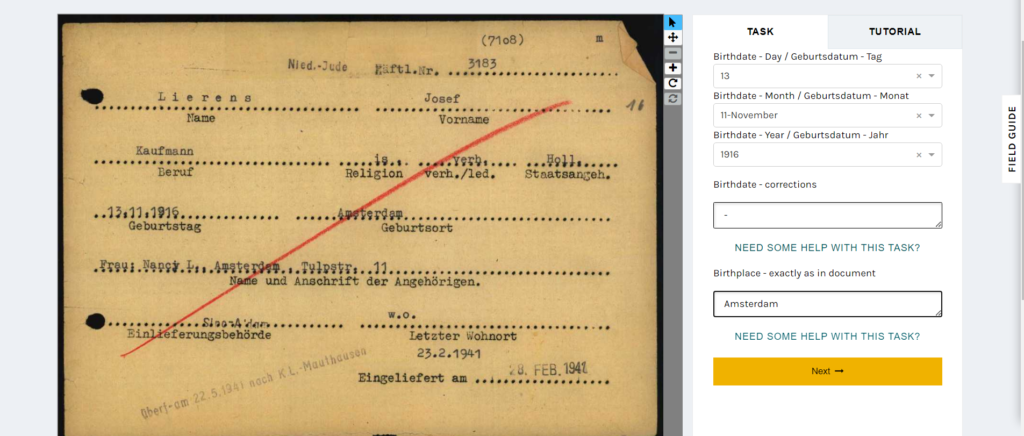
Below is an example of an average document:
As the most extensive archive of the documentations from the Nazi’s attrocities, this project has been internationally recognized and endorsed via the UNESCO Memory of the World Registry, and this initiative is well founded in this archive.
As seen from the photo above the process is rather streamlined, and this particular document was quite easy. Being fluent in German was very helpful in completing each document, but generally they had very ‘for dummies’ instructions for those who still want to help who are not fluent or even knowledgeable about German. I do, however, feel that my knowledge gained through my years of learning German, writing and syntax in particular, was very helpful throughout the process. Each document, well generally listing the same or similar information,was randomly generated. Each document I reviewed had yet to be completely digitized and require many ‘eyes’ like mine before finally get to the point of completion.

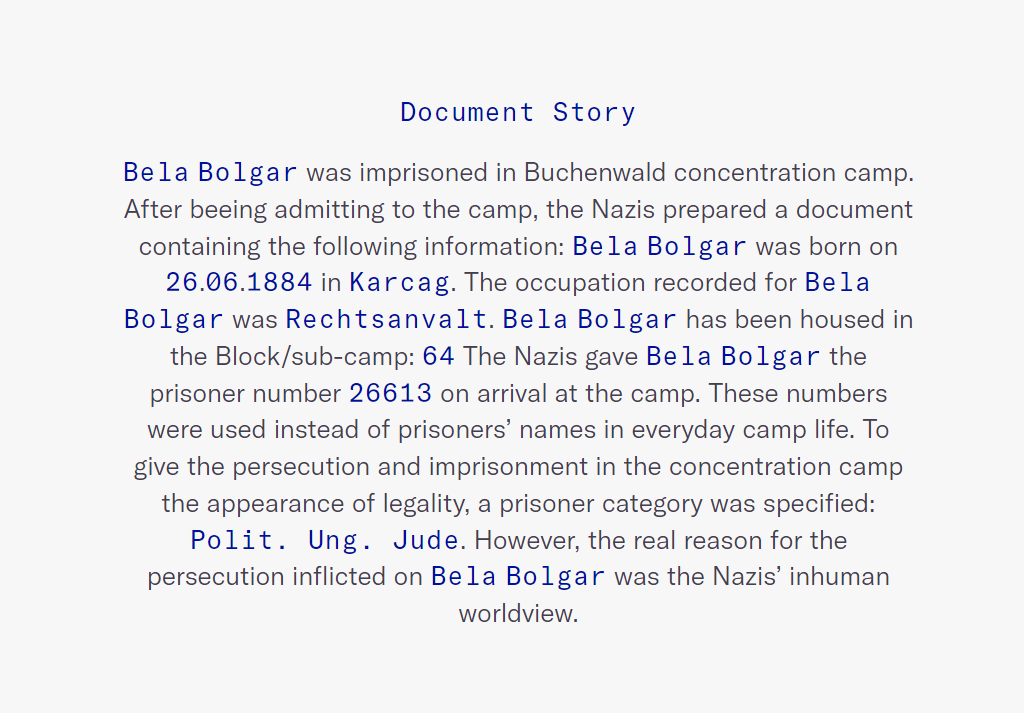
As depicted in the second example, reading the writing was the most difficult, but I also found it to be the most interesting, It felt rewarding with each bit of information I picked up to enter. The program makes it easy to mark unknown, unclear, and discluded information easily, and it does not disrupt the flow of inputting each portion asked.
My favorite part was eventually forming a larger whole, bringing back the identity of the person who was so systematically and coldly recorded. At the time their lives were chalked up to a few lines of information, more or less. The crowdsourcing initiative directed by the Arolsen Archives, #everynamecounts, is an initiative that allows people to participate beyond simply just recording information online, but it allows those participating to join in on remembering these people, showing that every, yes every, name does count, and that we are the ones making sure that they are not forgotten.
I highly recommend this project, and find it to be a fulfilling project, that I found myself rather drawn to, perhaps you will too: https://everynamecounts.arolsen-archives.org/en/


This is such an interesting archive! I’m so glad that there are people continuing to memorialize these people and the lives that were lost. The significance of bringing attention to individuals names, as a way of giving them back their personhood as much as possible is really touching, to make an understatement of it.
This is an interesting crowdsource project. It is also cool to make these kinds of documents more accessible to people. I mean, you have been in class, and I am so in for making things more accessible, not just to make them more accessible to disabled people but to people in general.