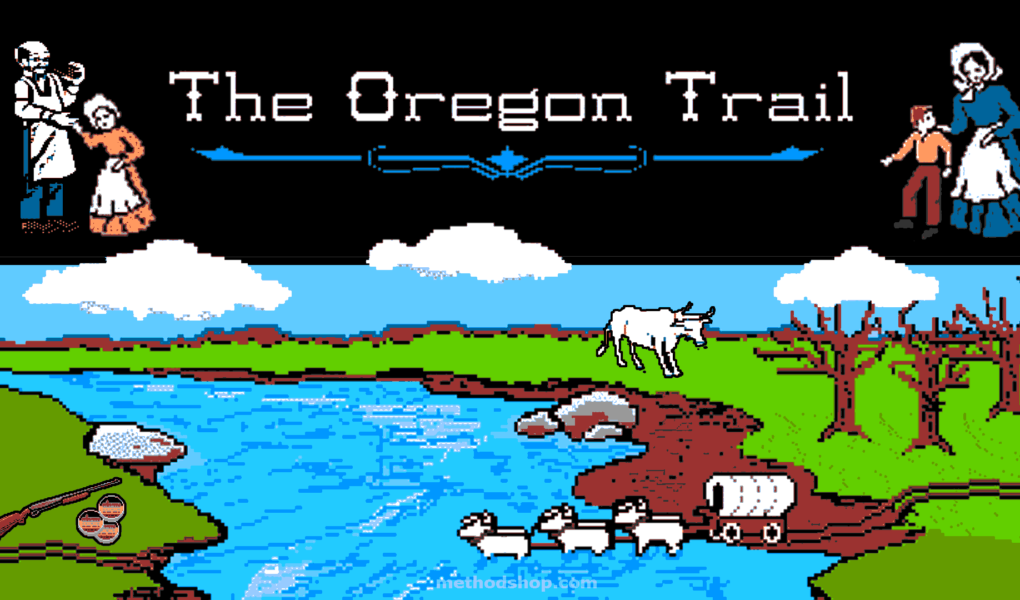
The Oregon Trail is an educational computer game that many generations of children have played in school. I was one of those children. In eighth grade I was able to play this game as well. So, when I reflected on what game I wanted to play, I decided that I would revisit the Oregon Trail Game. The game is designed to teach about the harsh realities of pioneer life around the 19th century, as they traveled from Missouri to Oregon on the Oregon Trail.
At the beginning of the game you are faced with the following introduction…
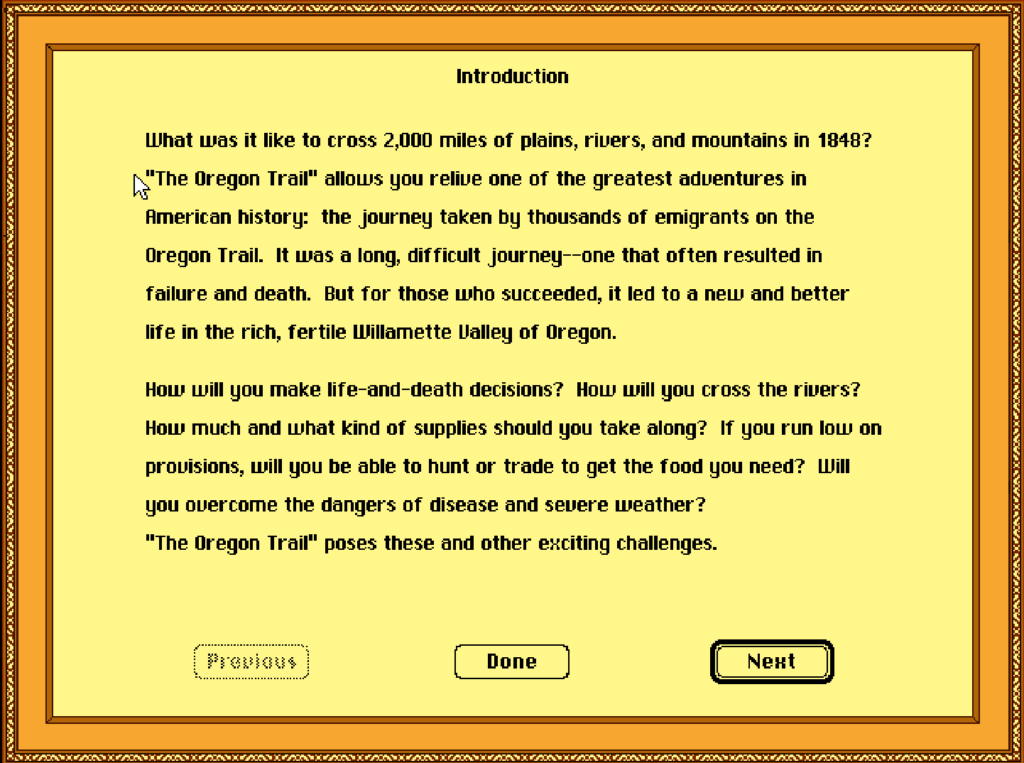
The introduction prepares the players to get into the realistic mindset needed to prepare the supplies in the next stage of the game. Giving a brief overview of just how difficult the journey was, while preparing the player for the scenarios simulated in the game.
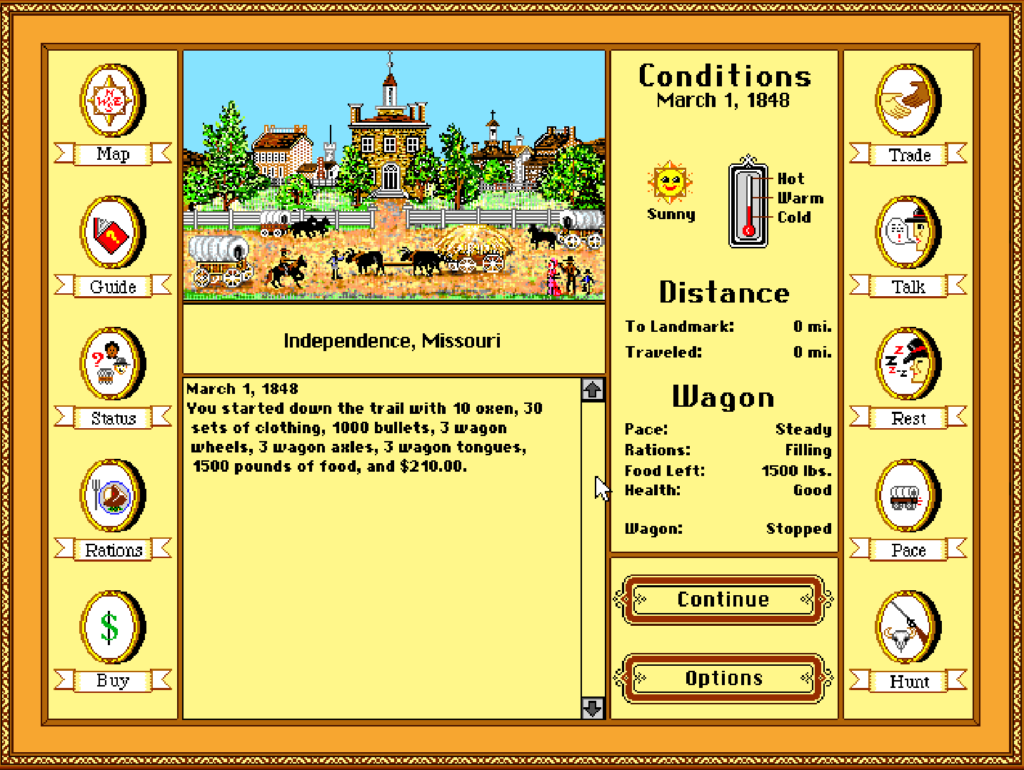
I chose to start earlier in March so that we would not hit the hottest or coldest weather, and hopefully be able to have minimal weather problems during the simulation. I also made the risky decision to buy most, all, of my stuff for the trail at the beginning, but in the long-term I think that was a good idea.
The player must manage resources such as food, water, and medical supplies, and simultaneously, make decisions about how/if to cross rivers, deal with illness or even death, and other challenges along the way. All realities of pioneer life in transition.
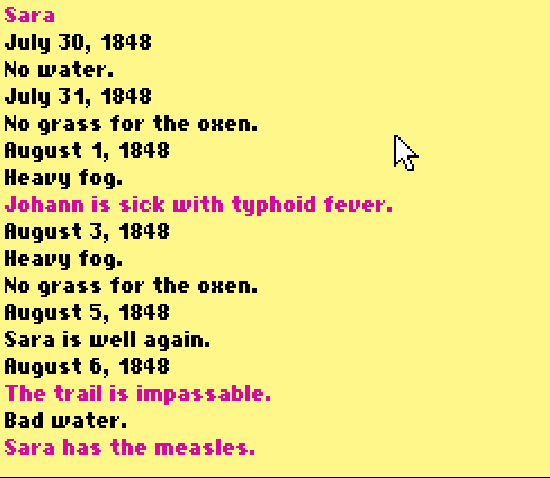
Example of my game sequence.
The article, Playing with the past: history and video games (and why it might matter), by Jeremiah McCall, underlined the educational importance of video games. I found this game to be the perfect mix of educational value and easily navigable gamer fun. Many of the games that McCall mentions in his article that are done by the company Paradox Games, like Crusader Kings 2, are grand strategy games, and in the barest bones of the game, it is a giant complex spreadsheet. I, personally, love Crusader Kings 2 and so The Oregon Trail Game provided me a similar experience, one that I genuinely enjoyed. The article also saw the importance of not only educational value, but also accuracy, another point this game does quite well depicting, and to a point I think the simplicity of the game is what makes it also easy to make accurate.
The article further discusses that video games can provide a unique and immersive experience that allows players to engage with history in a way that other, more traditional, forms of education historical media can not. And because of these they are able to take a large community of people who may not regularly interact within the history discipline, and as the article states, “communicate messages about the past that reach considerable numbers of people.”
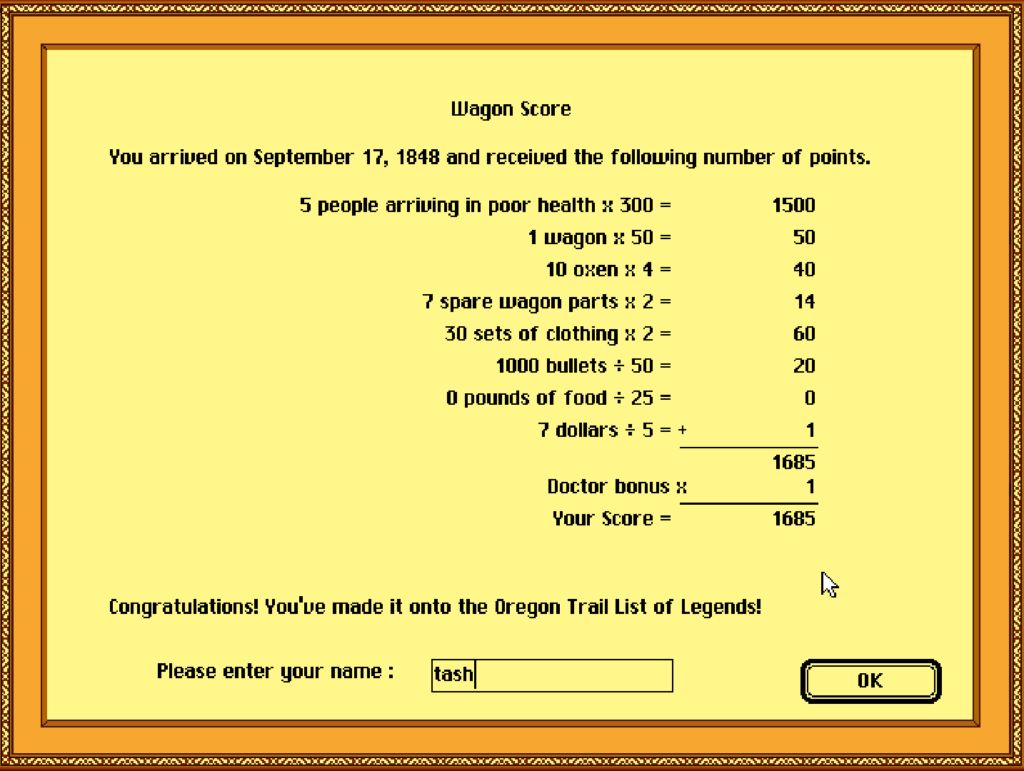
And to close out my post, I did survive the trail, I think all my wagon mates survived through the trail, although they did struggle with lack of food and water, and the outbreak of disease throughout the trip.
https://archive.org/details/msdos_Oregon_Trail_Deluxe_The_1992